Plant Nutrition
Nutrition plays an important role in the growth and development of exotic plants. However, a plant does not always need the same amount of nutrients. Its needs change depending on factors such as its growth stage, the season and the conditions in which it grows. More plant food therefore does not automatically result in a healthier or faster-growing plant.
On this page, you will learn what to consider when feeding your plant, how nutrition fits into its overall care and which signs may indicate that its nutritional needs are changing. This will help you understand when plant food is a valuable addition and when another care factor is likely to play a greater role.
By learning to recognise your plant’s nutritional needs, it becomes easier to adapt its care to the conditions in which it grows. This supports healthy development and helps you recognise changes in growth at an earlier stage.
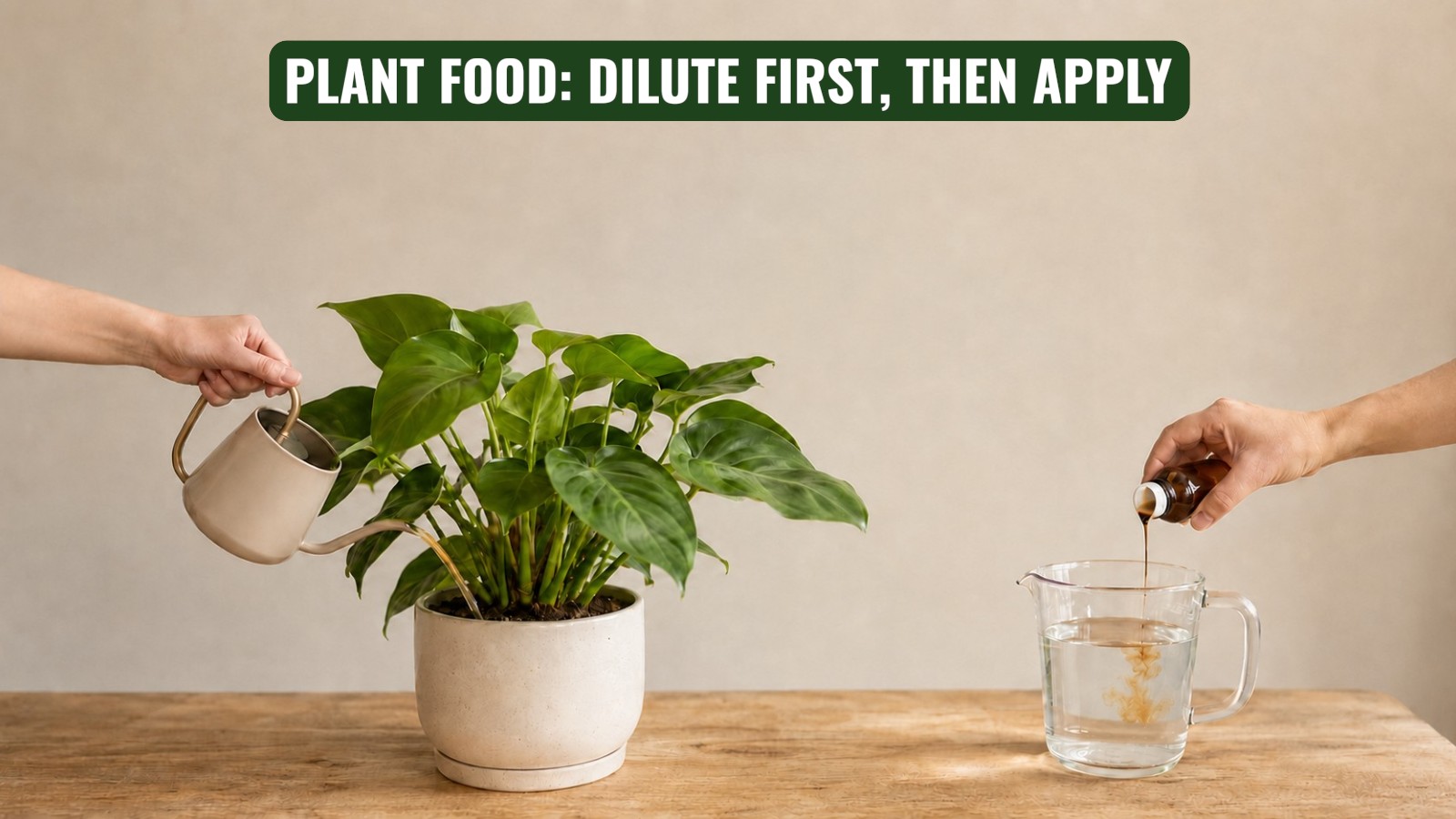
How can you tell whether your plant is receiving enough nutrients?
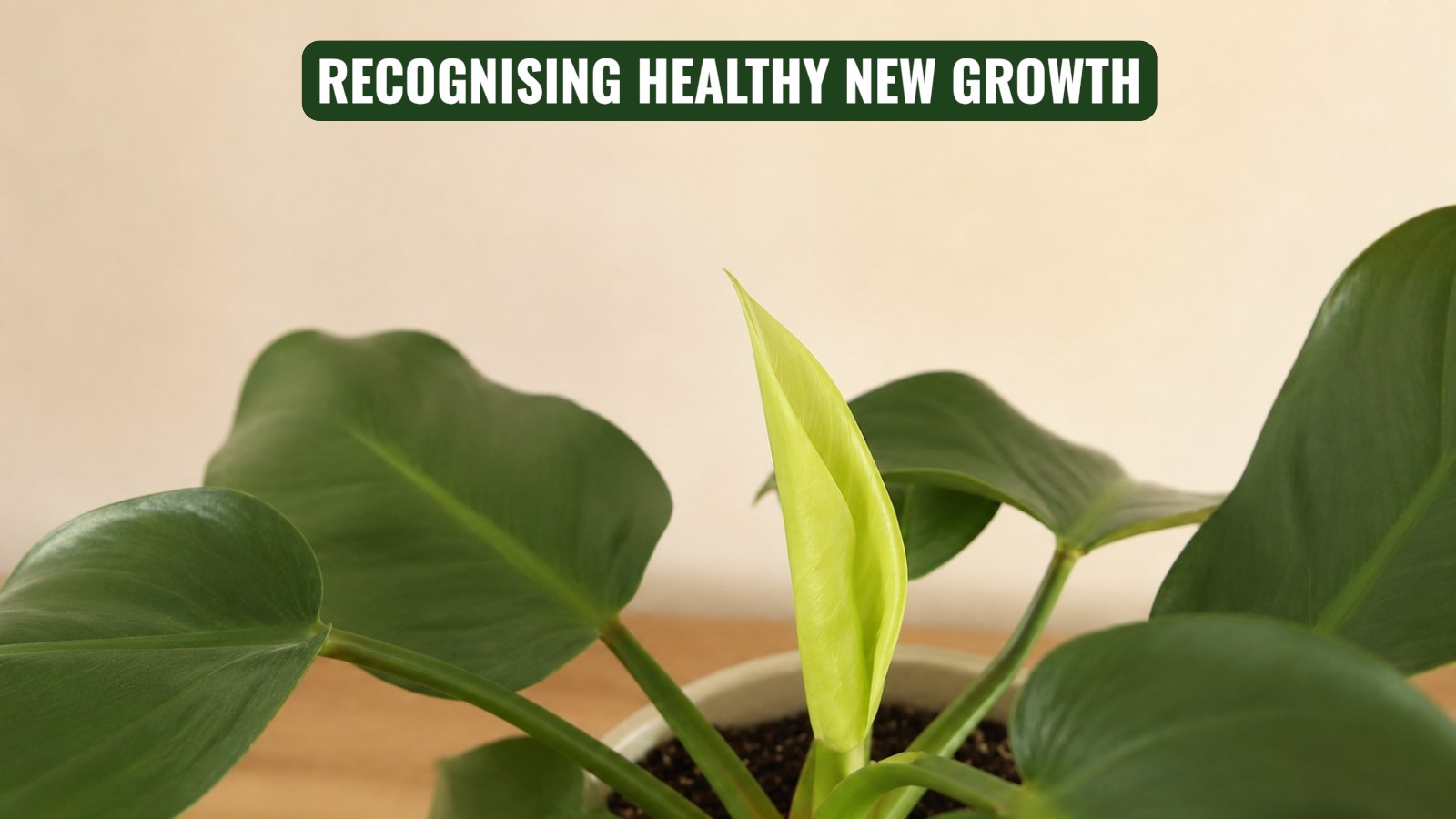
A plant that receives sufficient nutrients will usually show this through healthy and balanced development. New leaves grow to a normal size, retain their natural colour and develop without noticeable deformities. Its growth also remains consistent with the season, its growth stage and the characteristics of the plant.
It is important not to focus on a single moment, but to observe your plant’s development over a longer period. By regularly comparing new leaves, leaf colour and growth rate, you will gain an increasingly clear understanding of what constitutes normal development for your plant. This will help you recognise small changes at an earlier stage.
A plant that temporarily grows more slowly does not automatically need additional nutrients. Many exotic plants grow more slowly during the darker months, which also changes their nutritional needs. Slower growth therefore does not immediately mean that the plant has a nutrient deficiency.
Why is nutrition important for healthy growth?
Nutrition supports the healthy growth and development of exotic plants. During growth, a plant uses nutrients to form new leaves and roots and to keep existing parts of the plant healthy. When sufficient nutrients are available, a plant can develop in a way that suits the species, its growth stage and the conditions in which it grows.
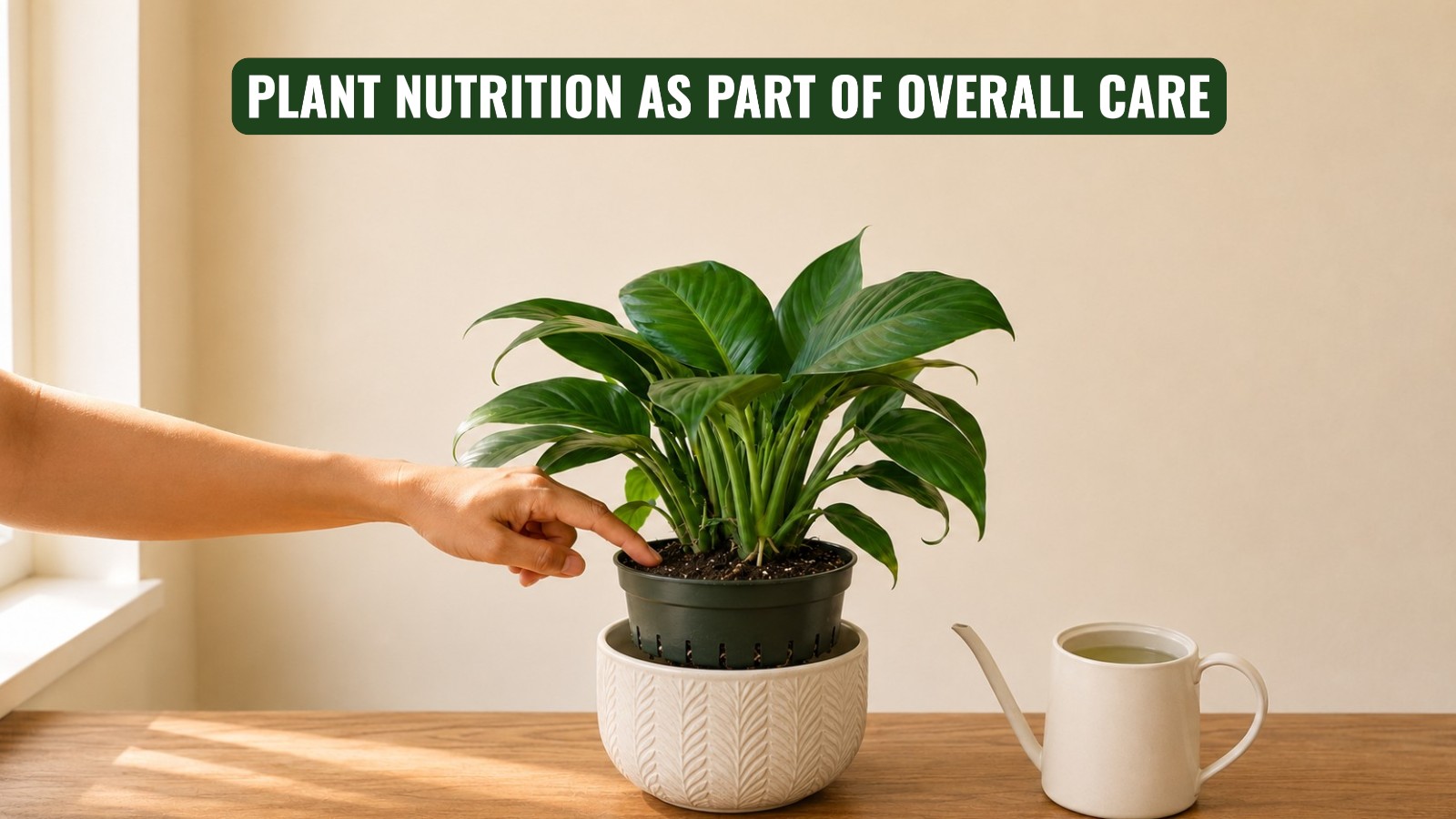
Nutrition never works independently from the rest of the plant’s care. A plant can only use nutrients effectively when light, water, temperature and other care factors also meet its needs. Additional plant food therefore cannot compensate for insufficient light or incorrect watering.
A plant’s nutritional needs also change throughout the year. A plant that is actively growing generally uses more nutrients than a plant that is temporarily growing more slowly. By not relying solely on a fixed feeding schedule and instead observing your plant’s growth and development, it becomes easier to adapt its nutrition to what it genuinely needs at that moment.
What should you consider when feeding your plant?
When does a plant need nutrients?
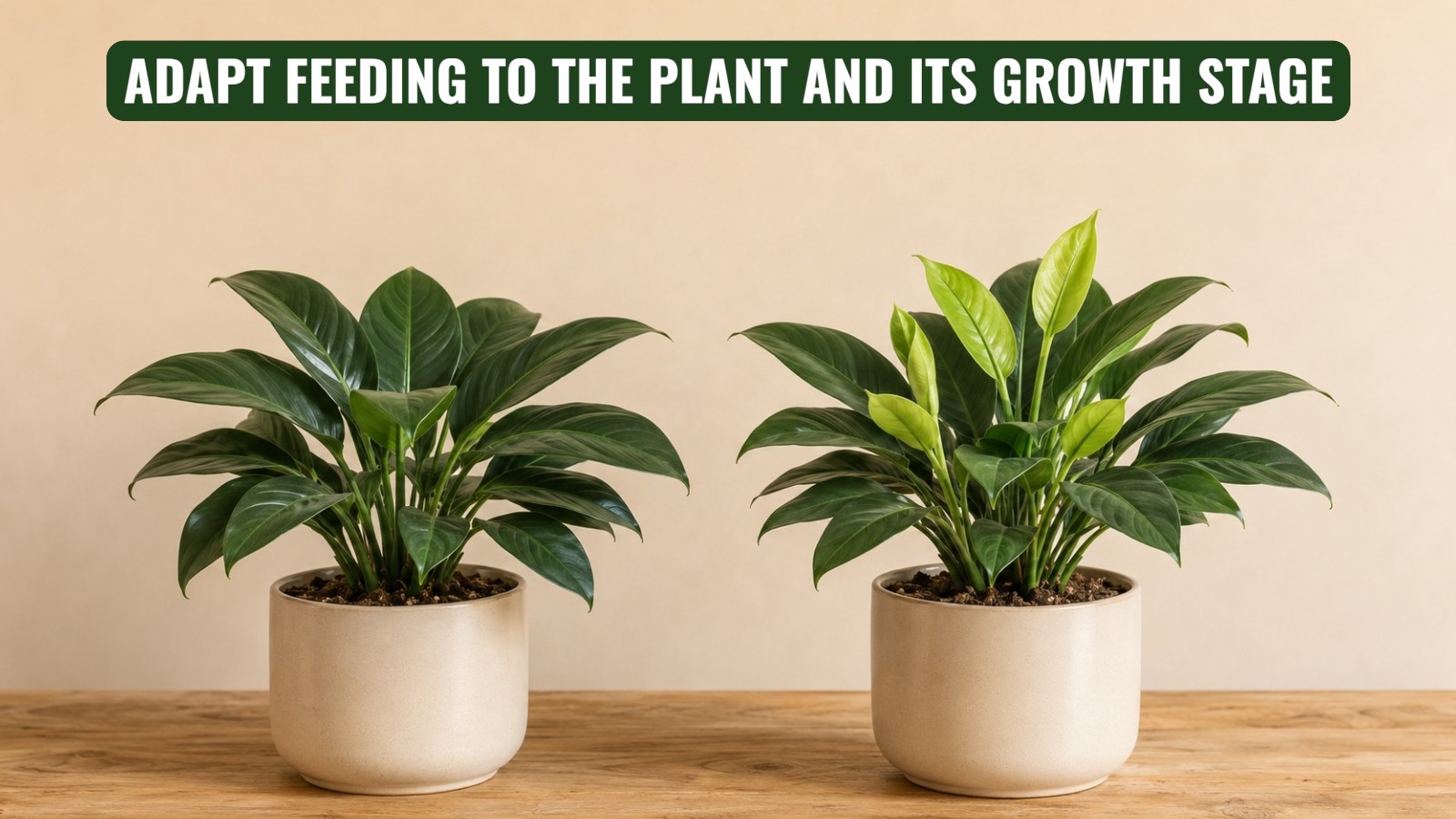
A plant that is actively growing generally uses more nutrients than a plant that is temporarily growing very little. New leaves, an increasing growth rate and active development are often signs that its nutritional needs are increasing.
Many exotic plants grow more actively during spring and summer, while their growth often slows during the darker months. However, it is advisable not to look at the calendar alone. By regularly observing your plant’s growth, it becomes easier to recognise when plant food is a valuable addition.
How much plant food is usually sufficient?
More plant food does not automatically result in better or faster growth. A plant can absorb only a limited amount of nutrients. Giving more nutrients than the plant can use does not automatically provide any additional benefit.
The recommended dosage of the chosen plant food therefore provides a good starting point. By continuing to observe your plant’s response, you can better assess whether the amount of plant food meets its needs at that moment.
What should you base the amount of plant food on?
Nutritional needs differ between plants and change throughout the year. Factors such as the growth stage, growth rate, amount of light, size of the plant and its general development all play a role.
By considering these conditions when feeding your plant, its care will be more closely aligned with what it needs at that moment. This prevents feeding from becoming a fixed routine while the plant’s actual needs continue to change.
Why is more plant food not always better?
Nutrition supports healthy growth, but only when the plant can actually use the nutrients. When a plant is growing very little, for example during a period of slower development or because other care factors are limiting its growth, its nutritional needs also decrease.
It is therefore better to determine why the plant’s growth is changing before deciding to give it more food. This ensures that its care is more closely aligned with what the plant genuinely needs.
How does nutrition work together with other care factors?
Light and nutrition
A plant can only use nutrients effectively when it receives enough light to grow actively. As its growth increases, its need for nutrients generally increases as well. With less light, growth often slows, which also changes the plant’s nutritional needs.
Additional plant food cannot compensate for insufficient light. If a plant is growing less successfully, it is therefore advisable to assess its position first before deciding to give it more food.
Water and nutrition
Water plays an important role in the absorption of nutrients. A plant can only absorb nutrients when its roots are able to take up sufficient moisture. Both soil that is too dry and soil that remains wet for too long can affect this process.
By assessing the moisture level of the soil first, it becomes easier to feed your plant at an appropriate time. This helps ensure that watering and feeding complement each other.
Temperature and nutrition
Temperature affects a plant’s growth rate. When growth slows, for example during cooler or darker periods, its nutritional needs often change as well. When a plant grows more actively, its need for nutrients usually increases.
Therefore, do not look at the temperature alone, but pay particular attention to your plant’s development. Its growth often provides a better indication of the amount of nutrients it needs at that moment.
Growth, roots and nutritional needs
Healthy growth results from the interaction between several care factors. When a plant receives sufficient light, has a healthy root system and grows under suitable conditions, it can use nutrients more effectively.
By assessing these factors together, you will gain a more complete understanding of what your plant genuinely needs. Nutrition is one part of its care, but it is never the only factor that determines how a plant develops.
What is your plant trying to tell you?
Some changes in a plant may indicate that the amount of nutrients it receives does not match its current needs. However, it is important not to conclude immediately that nutrition is the cause. Light, water, temperature and other care factors can produce similar signs. Always consider the complete situation before drawing conclusions.
Changes in growth
If new growth fails to appear or your plant is growing noticeably more slowly than usual, this may have several causes. A change in nutritional needs is one possibility, but reduced light, a lower temperature or a natural seasonal slowdown in growth may also play a role.
Compare its current growth with previous growth periods and assess its overall care before adjusting the amount of plant food.
Changes in leaf colour
A gradual change in leaf colour does not automatically mean that a plant needs more nutrients. Changes in light, water or other growing conditions can also affect the colour of both older and newer leaves.
By reviewing several care factors first, you can avoid drawing conclusions too quickly. If the change remains visible, it may be useful to assess the plant’s nutritional needs more closely.
Changes in leaf development
New leaves that remain smaller, grow less firmly or develop differently from what you are used to may have several causes. Nutrition may play a role, but it is rarely the only factor involved.
Therefore, do not look at a single leaf alone, but consider the development of the plant as a whole. Comparing several signs will provide a more reliable understanding of what your plant needs.
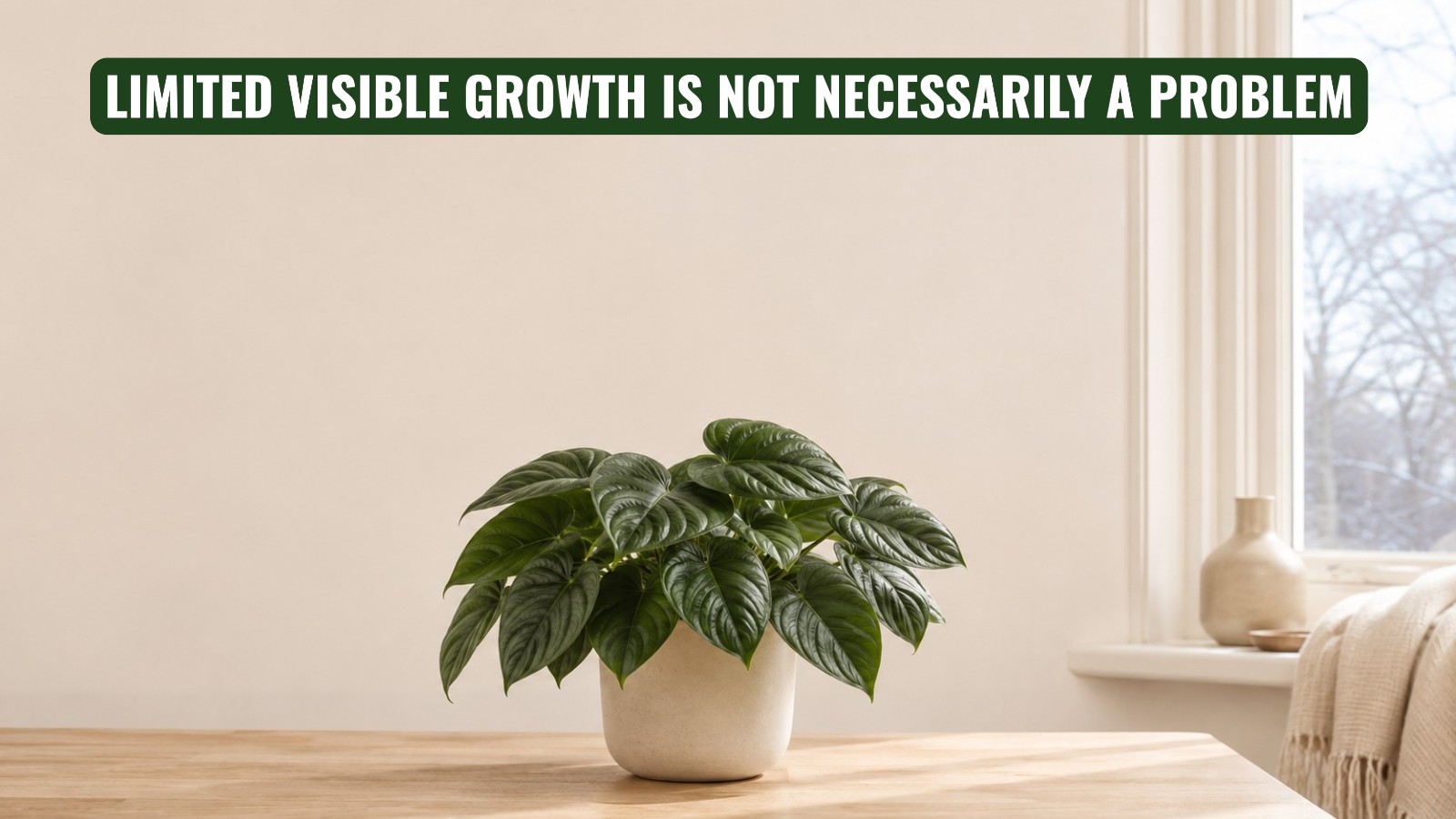
When is there no need to worry?
Not every change in a plant means that there is a problem with its nutrition. A plant’s growth changes with the conditions in which it grows. Slower development or a temporary change in growth therefore does not automatically mean that the amount of plant food needs to be adjusted.
Many exotic plants grow more slowly during the darker months. Growth may also temporarily slow after repotting, following a change of position or during the period after a plant has been brought into your home. This does not immediately mean that the plant has a nutrient deficiency.
Plant food does not have an immediate effect either. When you adjust the amount of plant food, the plant needs time to respond. Give your plant the opportunity to adapt to the new conditions and assess changes over a longer period rather than based on a single moment.
By continuing to observe calmly and comparing different signs, it becomes easier to distinguish normal changes from signs that may require additional attention.
What are the most common mistakes?
Many mistakes occur not because a plant receives too few nutrients, but because the amount of plant food is adjusted without first considering the plant’s development. Observing first and acting afterwards can prevent many unnecessary adjustments.
Giving too much plant food
More plant food does not automatically result in a healthier or faster-growing plant. When a plant receives more nutrients than it can use, this does not automatically provide any additional benefit. In some situations, an excess of nutrients may even place the plant under stress.
If growth is falling behind, first investigate the cause before deciding to give the plant more food.
Feeding at the wrong time
A common mistake is to continue feeding a plant while it is temporarily growing very little or not growing at all. A plant may also need time to adapt to new conditions immediately after a change of position or shortly after repotting.
By adapting its nutrition to the plant’s development instead of following a fixed routine, its care will better match its needs at that moment.
Expecting plant food to solve every problem
A plant that is not growing well does not automatically need more nutrients. Light, water, temperature, the root system and other care factors can also affect its growth.
If the cause lies elsewhere, additional plant food will usually not solve the problem. Always assess the plant as a whole before adjusting the amount of plant food.
Assessing one care factor in isolation
Nutrition is one aspect of plant care, but it is never the only factor that determines how a plant develops. If you focus solely on nutrition, you risk overlooking other possible causes.
Assessing all care factors together provides a more reliable understanding of what your plant genuinely needs.
Why do nutritional needs change throughout the year?
It is not the season itself, but primarily your plant’s growth that determines how many nutrients it needs. As its development changes, so do its nutritional needs. By paying particular attention to your plant’s growth rather than relying solely on the calendar, its care will be more closely aligned with what it needs at that moment.
Active growth period
New leaves, a visible increase in growth and active development are often signs that the plant’s nutritional needs are changing as well. During an active growth period, a plant generally uses more nutrients than when its growth temporarily slows.
Continue to monitor your plant’s development closely. Its growth provides a better indication of when additional plant food is appropriate than a fixed period on the calendar.
Dormant period
Many exotic plants grow more slowly during the darker months. As a result, their nutritional needs also change. The extent to which this occurs differs between species and growing situations.
Pay particular attention to your plant’s development. When its growth clearly slows, its nutritional needs often change as well.
Spring and summer
Many exotic plants grow more actively during spring and summer because the amount of light often increases. As a result, the nutritional needs of many species gradually increase as well.
Continue to monitor your plant’s development during this period. Not every plant grows under the same conditions or at the same rate.
Autumn and winter
When growth slows, nutritional needs usually change as well. During this period, it is often better to adapt the amount of plant food to the plant’s actual development than to follow a fixed routine.
By using your plant’s growth as the starting point, its care will be more closely aligned with what it needs at that moment.
What can you do today?
You do not need to make major changes to your plant’s care immediately. By observing calmly first, you will often gain a better understanding of its nutritional needs than by immediately giving more or less plant food. A few simple checks can quickly provide more insight into what your plant needs at that moment.
Check whether your plant is actively growing
Check whether your plant is producing new leaves or showing visible further development. Active growth is often an indication that its nutritional needs are changing as well.
If growth temporarily slows, assess the other care factors first before adjusting the amount of plant food.
Assess growth over a longer period
Compare the plant’s current development with how it looked several weeks ago. A single day or week usually does not provide a complete picture. Monitoring changes over a longer period makes it easier to distinguish normal development from a lasting change.
Look at the plant as a whole
Do not assess nutrition alone. Also consider the amount of light, watering, temperature and the plant’s development. It is the combination of these care factors that determines how a plant develops.
Only adjust the amount of plant food when there is a clear reason
Do not immediately change the amount of plant food in response to every change you notice. Assess the possible causes first and only adjust the amount when there is a clear reason to do so.
This ensures that the plant’s care remains aligned with what it genuinely needs at that moment.
Frequently asked questions
Should I feed my exotic plant throughout the year?
Not always. Its nutritional needs change with the plant’s growth. Therefore, pay particular attention to your plant’s development rather than looking only at the season.
Can I give my plant too much food?
Yes. More plant food does not automatically result in a healthier or faster-growing plant. Adapt the amount to your plant’s needs. More is not automatically better.
Does every exotic plant have the same nutritional needs?
No. Nutritional needs differ between species and change with the plant’s growth and the conditions in which it grows. The same plant may therefore have different needs at different times of the year.
Should I feed my plant when it is barely growing?
Not automatically. Slower growth does not immediately mean that a plant needs additional nutrients. First consider the plant’s development and assess the other care factors as well.
How can I tell whether my plant needs more nutrients?
Do not focus on a single leaf or one individual change. Assess the plant’s development over a longer period. Comparing several signs will provide a more reliable understanding of its nutritional needs.
Is it better to give too little or too much plant food?
Both too little and too much plant food can affect a plant’s development. It is therefore usually better to adapt the amount to the plant’s needs than to give more or less as a precaution.