TEMPERATURE
Temperature influences a plant’s growth, dormancy and overall condition. However, the appropriate temperature varies according to the plant species, growth stage and season. Tropical, subtropical and other exotic plants therefore do not automatically have the same temperature requirements.
There is no universal ideal or minimum temperature for all exotic plants. Always use the available product and care information for the specific plant as your starting point. By measuring the actual temperature around the plant, you can then determine whether its position is suitable and sufficiently stable.
What temperature does your plant need?
Always begin with the available species-specific product and care information. If this information includes a minimum temperature, maximum temperature or suitable growing temperature, you can use it to assess the conditions in the plant’s position.
It is important to distinguish between a suitable growing temperature and a temperature that a plant can tolerate temporarily. For example, a plant may withstand a brief cold period or temporary heat spike, while prolonged exposure to the same temperature may cause problems. A temporarily tolerable temperature limit is therefore not automatically suitable for normal or long-term growth.
Any stated minimum or maximum temperature must also be considered in the correct context. The risk is determined not only by the temperature itself, but also by the duration of exposure and the conditions surrounding the plant. The season, growth stage, health and conditions in which the plant was previously grown may also influence its response.
A plant’s natural origin can provide additional information about the climate to which the species was originally adapted. However, origin alone is not sufficient to establish an exact temperature limit. Terms such as tropical, subtropical or exotic cover large groups of plants with widely varying needs and tolerances.
If no specific temperature limits are available, they cannot be reliably inferred from the plant’s origin or plant group alone. Assess each plant species individually and avoid applying general minimum or maximum temperatures to all exotic plants.
Measure the temperature around the plant
The temperature stated for a room, home or weather forecast may differ from the temperature directly around the plant. Considerable local differences can occur within a single room or garden. It is therefore important to measure the temperature in the plant’s actual position.
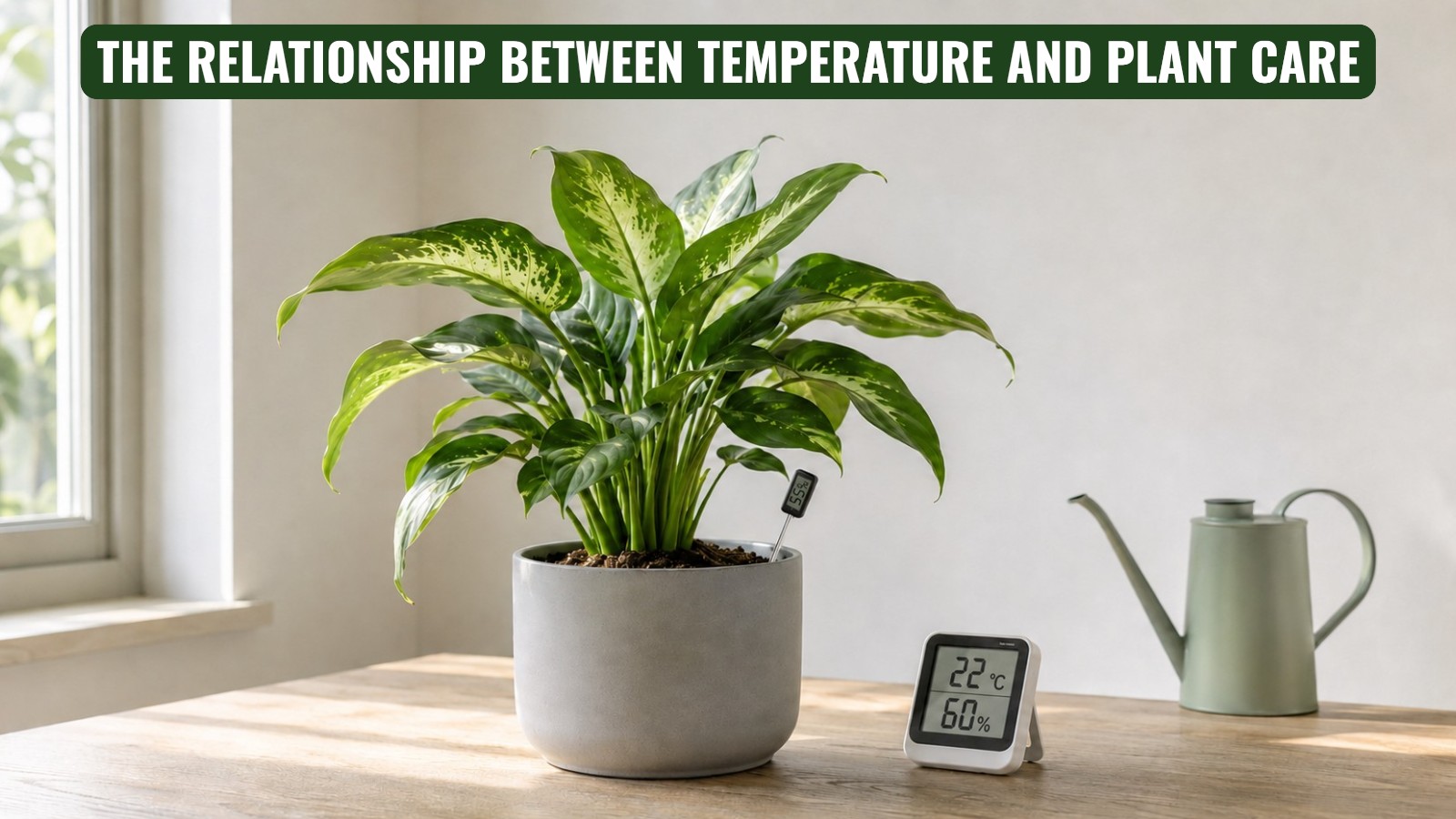
Place a thermometer as close to the plant as possible and at approximately the same height as most of the foliage. Do not place the thermometer directly against a cold window, heat source or sun-warmed surface, unless you specifically want to investigate its influence.
A single measurement only shows the temperature at that particular moment. Preferably measure over several days and check both the minimum and maximum temperatures. Include the differences between day and night. A thermometer that stores minimum and maximum readings can be useful for this purpose.
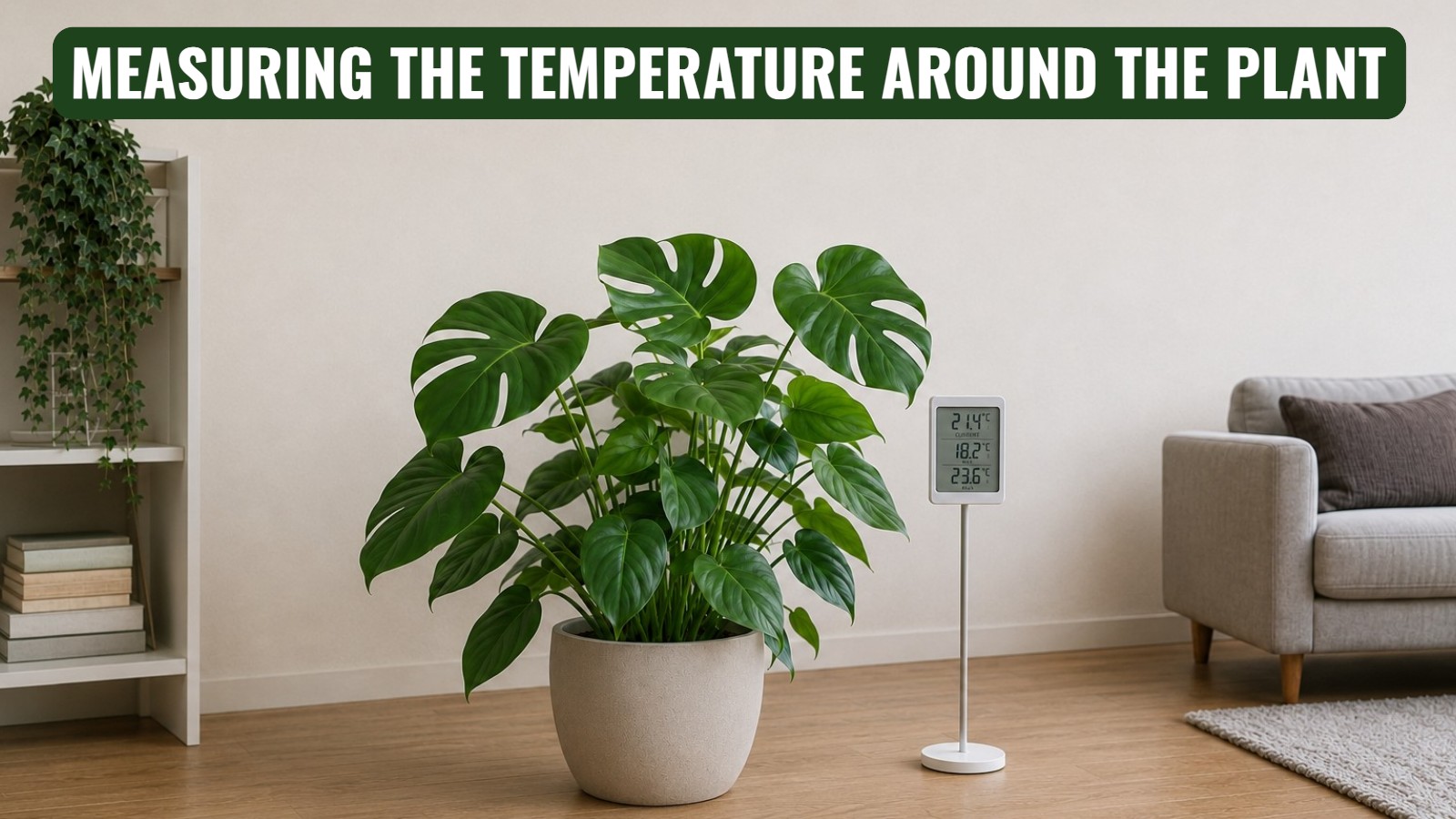
When measuring, pay attention to the influence of factors including:
-
windows and glass
-
heating and air conditioning
-
doors and draughts
-
walls and paving
-
sheltered corners
-
greenhouses and conservatories
In sunny conditions, the temperature behind glass can become considerably higher than elsewhere in the room. During a cold period, the temperature close to a window may instead be lower. Outdoors, a warm wall, paving or a windless corner can also create a different microclimate from what the general outdoor temperature suggests.
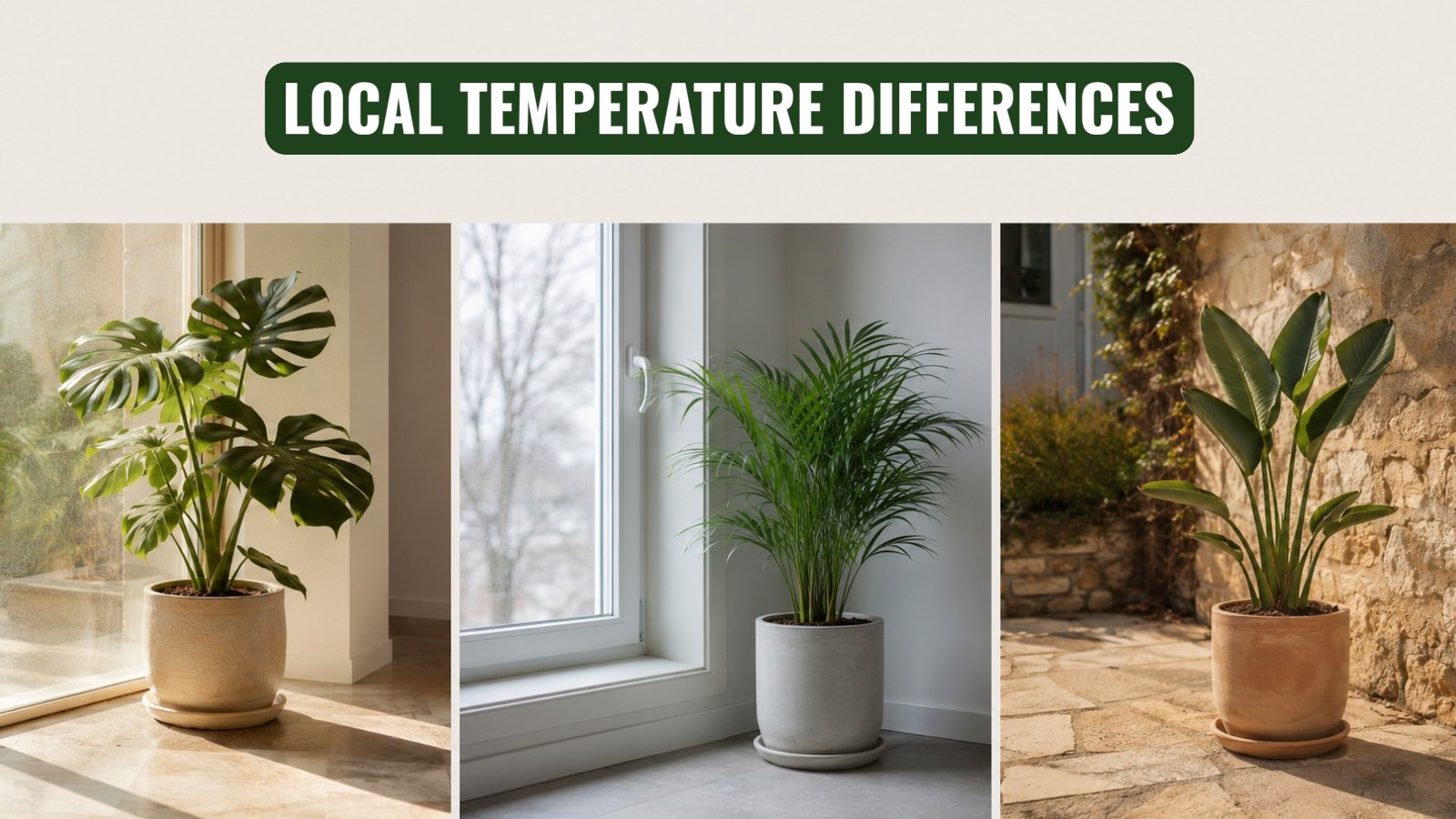
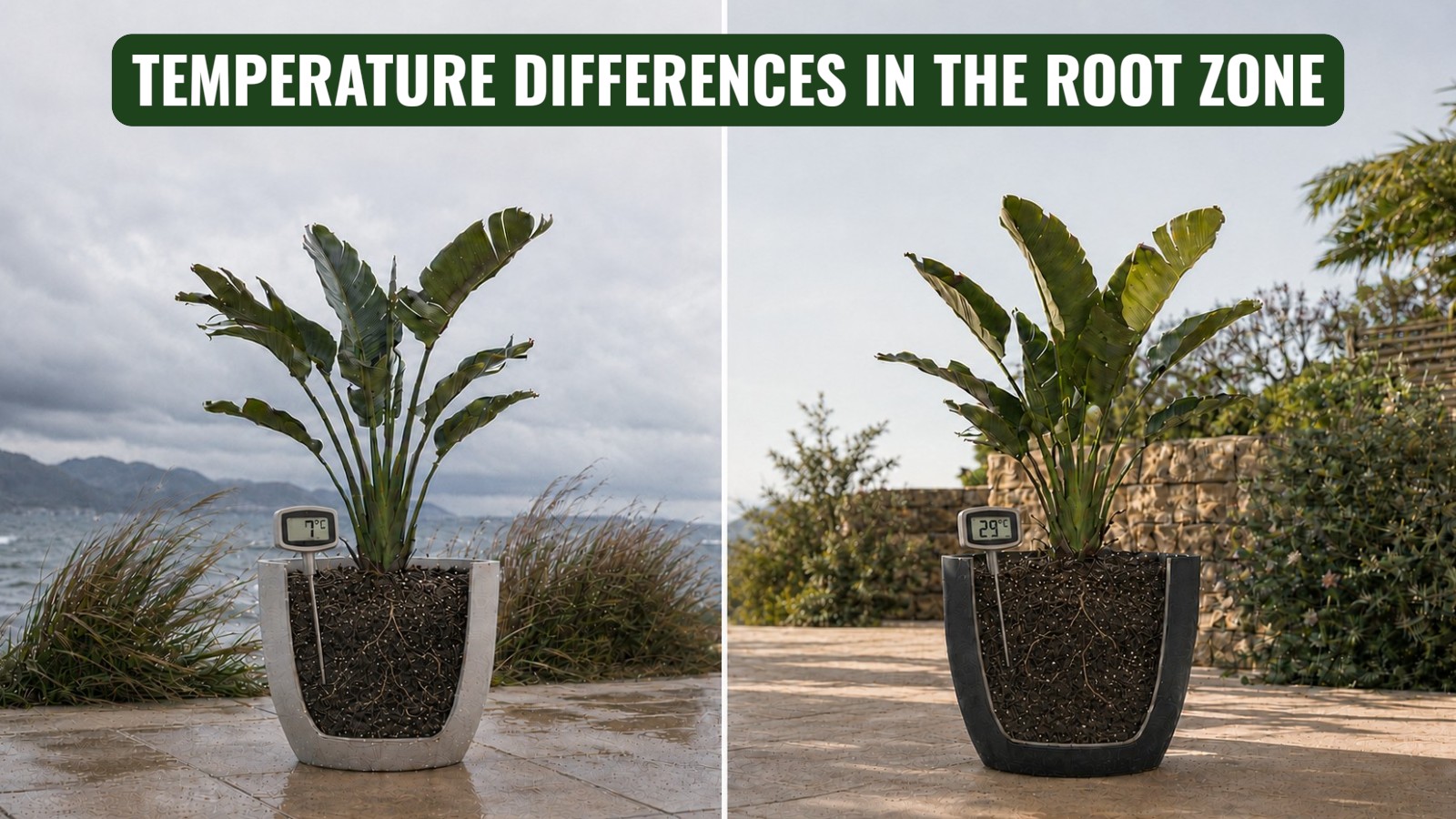
Also bear in mind that the measured air temperature is not always the same as the temperature of the foliage, pot or root zone. A pot is less buffered by the surrounding soil than the ground in a garden. As a result, the root zone in a pot can heat up or cool down relatively quickly.
Use the following method when assessing the plant’s position:
-
Check what temperature information is available for the plant.
-
Measure the temperature in the plant’s actual position.
-
Record the minimum and maximum readings.
-
Include the differences between day and night.
-
Compare the measured readings with the available information.
-
Assess whether the conditions are suitable and sufficiently stable.
It is not always practical to measure the leaf or root temperature separately. In that case, pay particular attention to conditions that may cause strong localised heating or cooling.
Assessing low temperatures and cold conditions
What is considered cool or too cold varies between plant species. Some exotic plants can temporarily tolerate low temperatures, while others may experience problems at higher temperatures. Cold conditions should therefore be assessed using the available information for the specific plant.
A brief drop in temperature does not automatically have the same consequences as prolonged cold. Several factors are important when assessing the risk:
-
the lowest temperature reached
-
the duration of exposure
-
wind and draughts
-
the moisture level in the root zone
-
the plant’s position
-
the health of the plant
-
whether the plant is grown in a pot or in the ground
A plant in a pot may be more sensitive to rapid cooling of the root zone. The pot and substrate receive less protection from the surrounding soil. Small pots and pots that are fully exposed to wind or cold can cool down particularly quickly.
At lower temperatures, a plant often uses less water and the substrate may remain moist for longer. Depending on the plant species and conditions, prolonged wetness in the substrate can be unfavourable. However, do not deliberately allow the root zone to dry out completely as a general protective measure. Check the substrate and adjust watering to the needs of the specific plant.
Draughts also require attention. A draught is not a temperature in itself, but a movement of air. Cold air currents can cause rapid and localised temperature changes around a plant. This may occur near an exterior door that is opened regularly, an open window or a ventilation system.
When assessing cold conditions, do not look only at the lowest measured temperature. Also consider how long this temperature lasts and the conditions to which the foliage, pot and root zone are exposed.
Hardiness, overwintering, winter protection and recognising frost damage are covered separately. A plant’s temperature requirements alone do not fully determine which winter measures are necessary.
Assessing high temperatures and heat
A tropical or exotic origin does not automatically mean that a plant can tolerate extreme or prolonged heat. Heat-loving plants also have limits. In addition, the temperature of the foliage, pot or root zone can become considerably higher than the measured air temperature.
Additional heat can build up in places such as:
-
behind glass
-
against a warm wall
-
on a patio or other paved surface
-
in a greenhouse or conservatory
-
in a sheltered location with little or no wind
Outdoors, walls and paving can absorb heat and release it again later. This can expose a plant to high temperatures for longer than might be expected from the general weather forecast.
The plant pot also plays a role. Dark pots can become very warm in direct sunlight. This heat can be transferred to the substrate and root zone. Temperatures can change particularly quickly in smaller pots.
At higher temperatures, evaporation often increases. However, the rate at which a plant and its substrate lose moisture is also affected by light, humidity, air circulation, pot size, substrate and plant species. Do not automatically provide extra water based solely on the air temperature; also check the plant and substrate.
Air circulation can reduce localised heat build-up, but it can also increase evaporation from the foliage and substrate. In an enclosed greenhouse or conservatory, ventilation can help remove accumulated heat, but air movement does not automatically reduce the general ambient temperature. Its effect depends on the conditions.
A suitable position can help limit excessive heating. When assessing the position, consider not only the air temperature but also the effects of glass, direct sunlight, warm surfaces and the heating of the pot and root zone.
Prolonged or extreme heat can cause temperature stress or damage. Recognising and treating heat damage and sunburn are covered in the separate problem guides on these subjects.
Temperature differences and sudden changes
Differences between day and night temperatures are normal. The acceptable size of these differences depends on the plant species and the other conditions. A gradual daily temperature fluctuation is not the same as a sudden transition.
A rapid temperature change can place more stress on a plant than a gradual transition to the same final temperature. Sudden changes can be caused by:
-
draughts
-
an open window or exterior door
-
heating
-
air conditioning
-
transport
-
moving a plant between indoor and outdoor conditions
-
a sudden change in the weather
The temperature can also vary considerably within a single room. A position directly above a heater may be warmer than the rest of the room, while a place next to a window may become noticeably colder at night. Measure the temperature again whenever a plant is moved to a different position.
Where possible, allow a plant to adjust gradually to significantly warmer or colder conditions. The complete method is covered separately on the page about acclimatising plants.
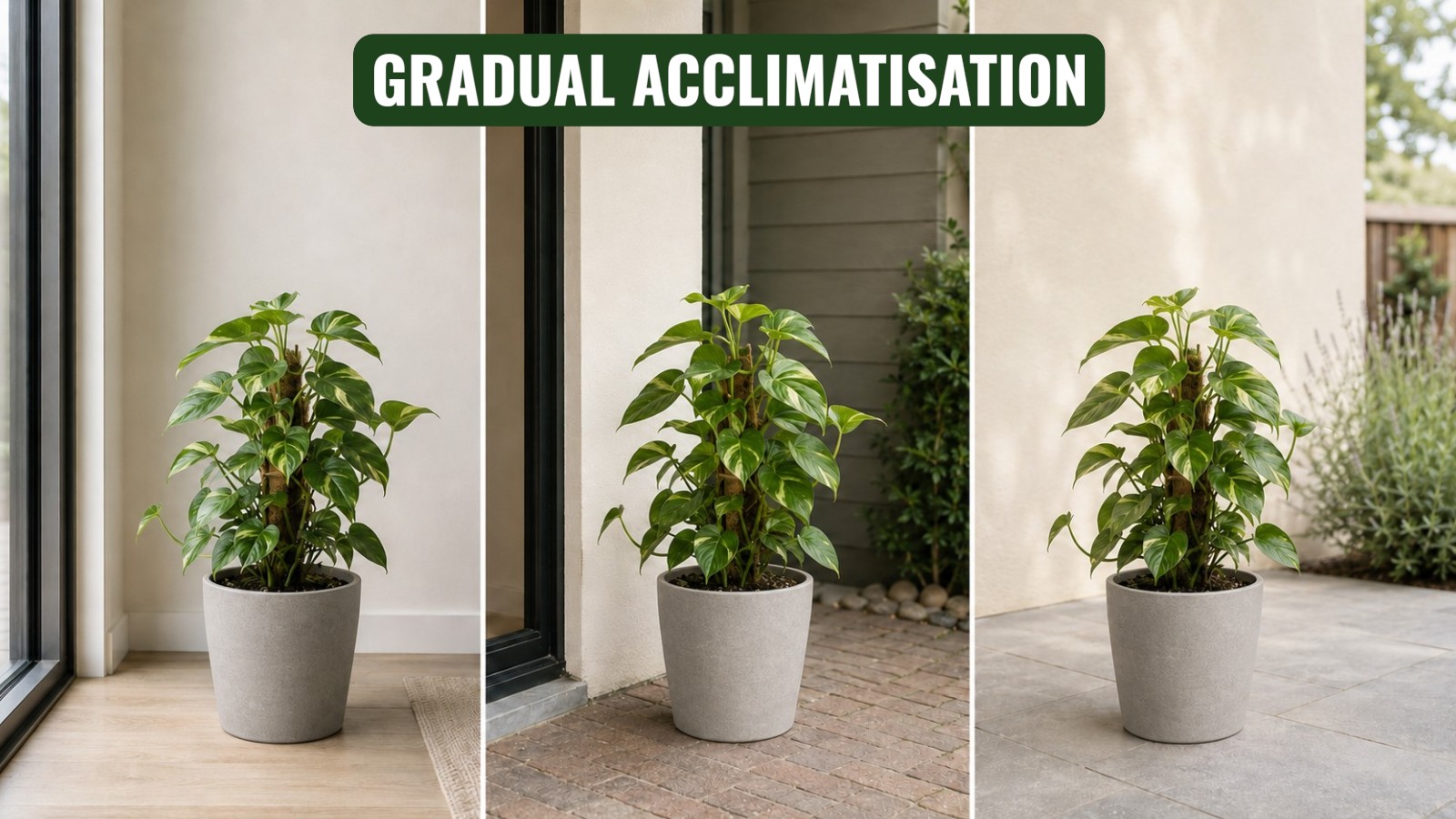
Whenever possible, avoid changing several growing conditions at the same time. If temperature, light, watering and position all change suddenly, it becomes more difficult to determine what the plant is responding to.
Observe the plant after a change and continue monitoring the temperature in its new position.
Adjust care according to the temperature
Temperature does not operate independently of the other growing conditions. Changes in temperature can affect a plant’s water requirements, growth rate and the rate at which the substrate dries out. Adjust care according to the actual conditions rather than relying solely on the calendar.
At higher temperatures, water may evaporate more quickly from the substrate and through the plant. This does not automatically mean that every plant immediately needs more water. Check the substrate first and take the plant’s specific water requirements into account.
At lower temperatures, a plant often grows more slowly and the substrate may remain moist for longer. If the same quantity of water is provided according to a fixed schedule, the root zone may consequently remain wet for longer than it would under warmer conditions.
Watering according to a fixed number of days is therefore less reliable than regularly checking the plant and substrate. The complete method for determining when to water can be found on the page about watering.
A higher temperature also does not automatically mean that a plant needs more fertiliser. Nutrient requirements are determined by factors including the plant species, growth stage, root activity and the available amount of light. Do not provide additional fertiliser solely because the temperature rises.
Temperature and light work together. Heat can influence evaporation and the plant’s biological processes, while insufficient light can limit the plant’s capacity for active growth. A warm position is therefore not automatically a suitable growing location if insufficient light is available. Light requirements and the choice of position are covered in greater detail on the page about light and positioning.
The combination of warmth, moisture and limited air circulation also requires attention. These conditions can create an unfavourable local environment around the plant. Temperature should therefore be assessed together with water, light, humidity, air circulation, substrate and drainage.
Only adjust the care factors for which the conditions or requirements have actually changed. By avoiding several major adjustments at the same time, it remains easier to determine which change is having an effect.
Frequently asked questions about temperature
Is a temporarily tolerated temperature also suitable for long-term exposure?
Not automatically. A plant may tolerate a brief temperature spike or temporary drop without that temperature being suitable for long-term growth. The duration of exposure, the plant’s health and the other conditions also influence the risk.
Where is the best place to measure the temperature?
Measure as close to the plant as possible and at approximately the same height as most of the foliage. For a potted plant, also check whether the pot and root zone are exposed to strong heating or cooling.
How long should I measure the temperature?
Preferably measure over several days and include both daytime and night-time temperatures. Minimum and maximum readings provide a more reliable picture than a single measurement.
Why is the temperature near a window different?
In sunny conditions, glass can cause strong localised heating. During cold periods, the temperature close to a window may instead be lower than elsewhere in the room.
Is a draught the same as a low temperature?
No. A draught is the movement of air, not a temperature. However, an air current can cause rapid localised temperature changes. The effects depend on the temperature of the air, duration, plant species and position.
Can a plant pot become too warm or too cold?
Yes. A pot is less buffered by the surrounding soil and can heat up or cool down relatively quickly under the influence of sunlight, wind or cold. As a result, the temperature in the root zone may differ from the general air or soil temperature.
Assessing temperature in four steps
First check which species-specific temperature information is available. Then measure the minimum and maximum temperatures in the plant’s actual position over several days, including the differences between day and night.
Next, assess not only the measured readings but also the duration of exposure and the conditions surrounding the foliage, pot and root zone. Finally, adjust only the position or care factors for which changes are actually necessary.
A suitable and sufficiently stable environment is more important than pursuing one general temperature value.