Light & Location
Light plays an important role in the growth and development of exotic plants. The amount of light a plant receives influences the way it grows and develops. As a result, light is one of the most important aspects of care for many exotic plants.
The amount of light a plant receives is largely determined by its location. Where a plant is placed affects the conditions around it and, consequently, its development. As a result, two plants of the same species can develop differently, even when they are located in the same room.
Light and location are also closely connected to other aspects of plant care. Changes in lighting conditions can influence a plant's growth and, in turn, affect other care factors. By gaining a better understanding of light and location, it becomes easier to assess growing conditions and interpret a plant's development. On this page, you will learn more about different lighting conditions, how to evaluate a plant's location and the influence of light on exotic plants.
Why is light important for exotic plants?
For many exotic plants, light is one of the most important factors in plant care. Together with water, nutrition and temperature, it forms one of the environmental conditions that influence a plant's growth and development. The amount of light a plant receives plays a significant role in the way it develops.
The influence of light extends throughout virtually every stage of a plant's development. It plays a role in the formation of new leaves, the vigour of a plant and its long-term development. As a result, plants of the same species can develop differently when they grow under different lighting conditions.
Unlike some other care factors, changes in light are not always immediately visible. Plants often respond gradually to changes in their environment. Consequently, it may take some time before differences in growth or development become noticeable. Even so, light continuously influences the way a plant develops.
For this reason, a good understanding of light is an important part of plant care. The better you understand the role light plays, the easier it becomes to monitor a plant's development and assess its growing conditions.
What types of lighting conditions are there and how can you assess them?
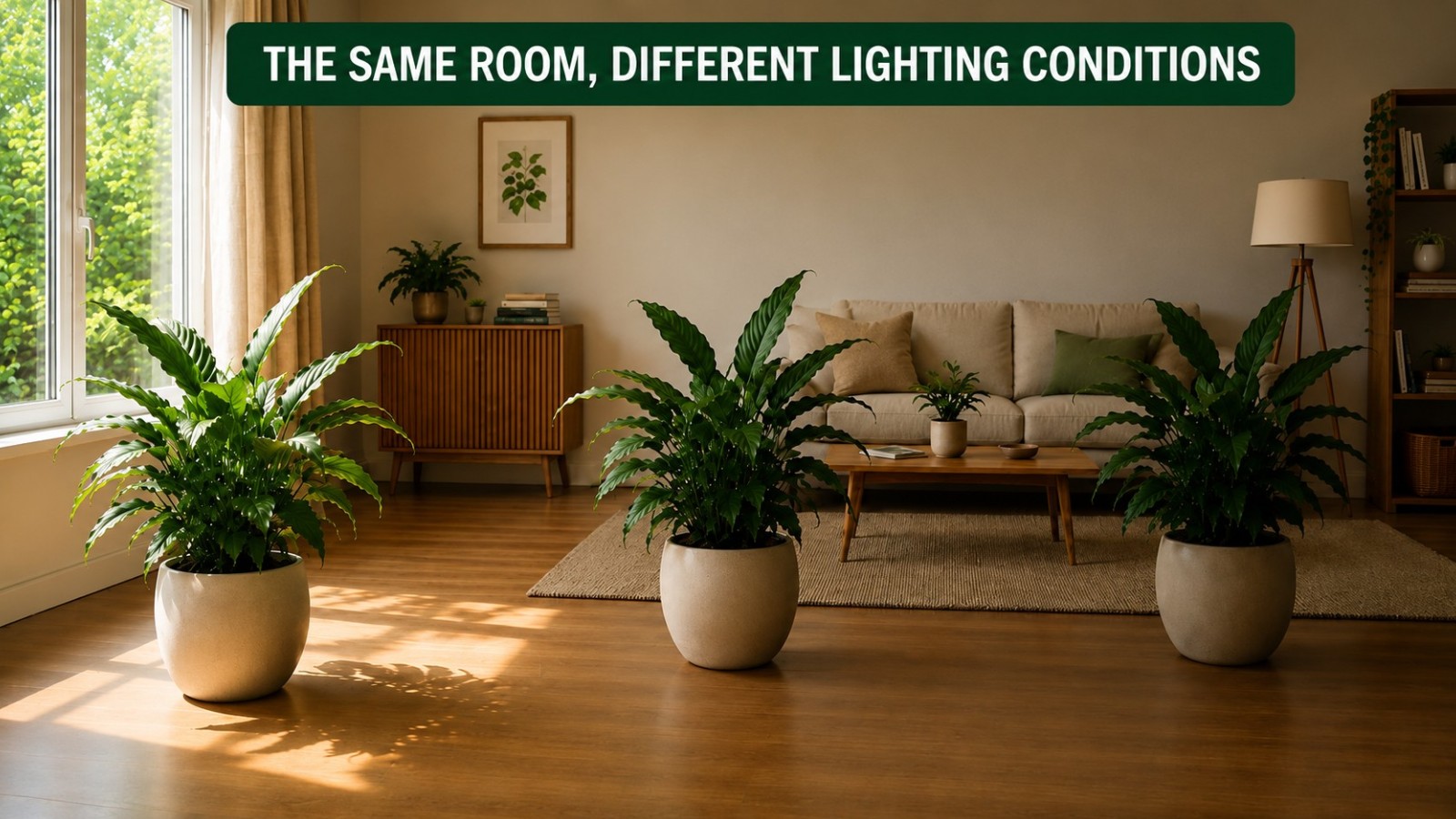
Not all lighting conditions are the same. The amount of light a plant receives can vary considerably, even within the same room. A location directly in front of a window often receives different lighting conditions than a spot just a few metres away. Therefore, it is important not to judge the room as a whole, but to focus on the exact location where the plant is placed.
Which lighting conditions are most common?
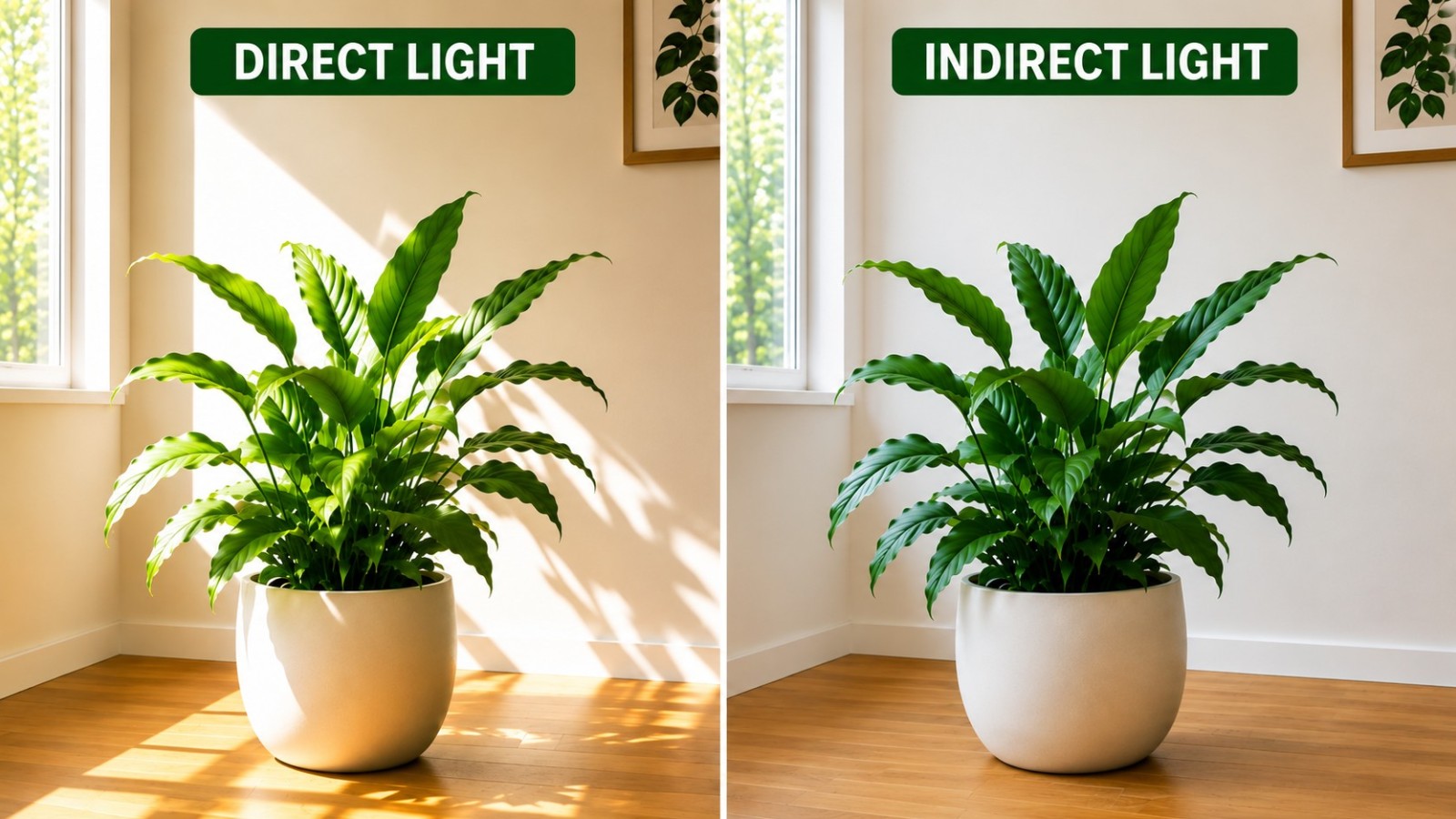
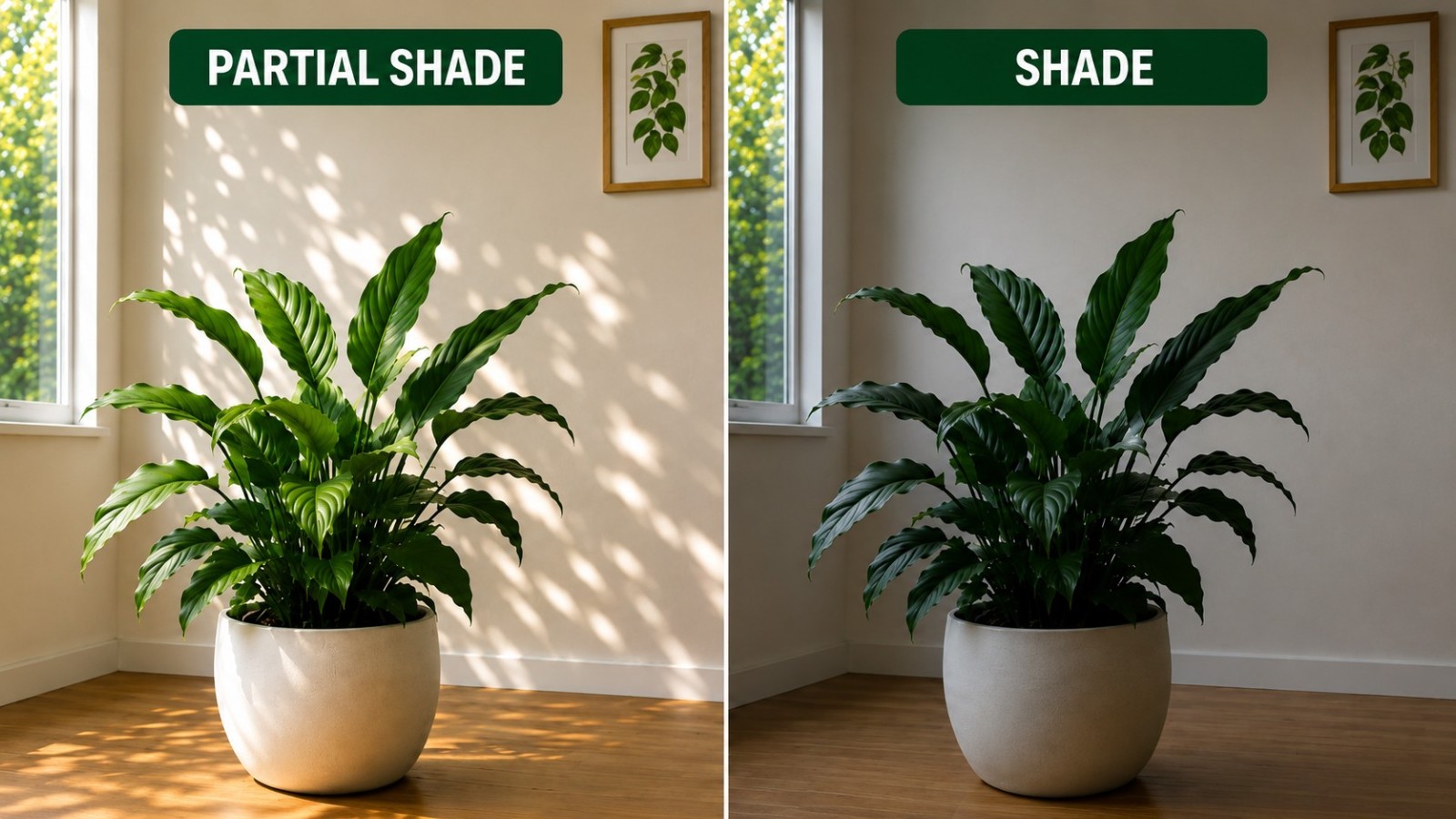
When assessing light, a distinction is commonly made between direct light, indirect light, partial shade and shade. These terms help identify and compare different lighting conditions.
Direct light occurs when sunlight shines directly onto a plant. This is common in locations where the sun reaches the plant directly for part of the day.
Indirect light occurs when a room receives plenty of daylight without the sun shining directly onto the plant. In this case, the light reaches the plant in a filtered or diffused way.
Partial shade consists of a combination of brighter and shadier periods throughout the day. A location therefore does not receive the same amount of light continuously, causing the lighting conditions to change noticeably during the day.
Shade does not mean that a plant receives no light. Shaded locations still receive daylight, but considerably less than places with direct or indirect light. As a result, there is a clear difference in the amount of light a plant receives throughout the day.
In practice, these lighting conditions gradually blend into one another. The amount of light is influenced by factors such as the position of windows, the orientation of a room, objects outside and changes throughout the day or the year. As a result, it is not always possible to place a location entirely within a single category.
How can you assess the light at a plant's location?
Assessing light begins with careful observation. It is not the room as a whole that matters, but the exact location where the plant is placed. Even within a single room, lighting conditions can vary considerably.
The distance from a window often has a major influence on the amount of light a plant receives. The direction the windows face can also affect lighting conditions throughout the day. In addition, buildings, trees, canopies and other objects outside may influence the amount of daylight that reaches a room.
For this reason, it is advisable to observe a plant's location at different times of the day. A spot that receives plenty of light in the morning may receive significantly less later in the day. The opposite can also occur. As a result, two locations that appear similar at first glance may actually provide different lighting conditions.
By assessing light in this way, you gain a better understanding of the conditions surrounding a plant. This makes it easier to recognise different lighting conditions, compare locations and understand changes throughout the year.
How do light and location influence a plant's growth?
Light and location have a significant influence on the way a plant grows and develops. The amount of light a plant receives partly determines the conditions under which it grows. As a result, plants of the same species can develop differently when they are placed in different locations.
The influence of light is visible in various aspects of a plant's development. It plays a role in the formation of new leaves, the vigour of a plant and the rate at which it develops. The overall size and shape of a plant are also partly influenced by the conditions in which it grows. As a result, plants of the same species may develop a different appearance over time, even though they belong to the same species.
The location itself also influences this development. A plant growing in a brighter position develops under different conditions than the same plant in a location with less light. Consequently, differences may arise that only become visible over time. Because plants usually respond gradually to their environment, these differences are not always noticed immediately.
For this reason, it is important to assess a plant's growth in combination with the conditions in which it grows. Light and location are not separate factors but part of the environment in which a plant develops. Taking this into account provides a better understanding of a plant's development and the conditions under which it grows.
How are light and location connected to other care factors?
Light and location are closely connected to other aspects of plant care. Light, water, nutrition and temperature continuously influence one another. When one factor changes, it often affects several others as well. For this reason, plant care should not be viewed as a collection of separate tasks, but as a combination of environmental conditions that together influence a plant's development.
Light often plays a central role in this interaction. When a plant receives more light, its growth often increases. A plant that grows more actively uses the available conditions differently from a plant that grows less actively. As a result, changes in the amount of light can influence several aspects of plant care, even when those other factors remain unchanged.
A change of location often affects more than just the amount of light. Moving a plant usually exposes it to a different combination of environmental conditions. As a result, changes in growth and development may occur, even when the overall care routine remains the same.
For this reason, it is important to consider changes around a plant as a whole. Growth, development and plant care are rarely determined by a single factor. Light and location form part of a larger system in which different environmental conditions continuously influence one another. The better this relationship is understood, the easier it becomes to interpret a plant's development in the right context.
Why do lighting conditions change throughout the year?
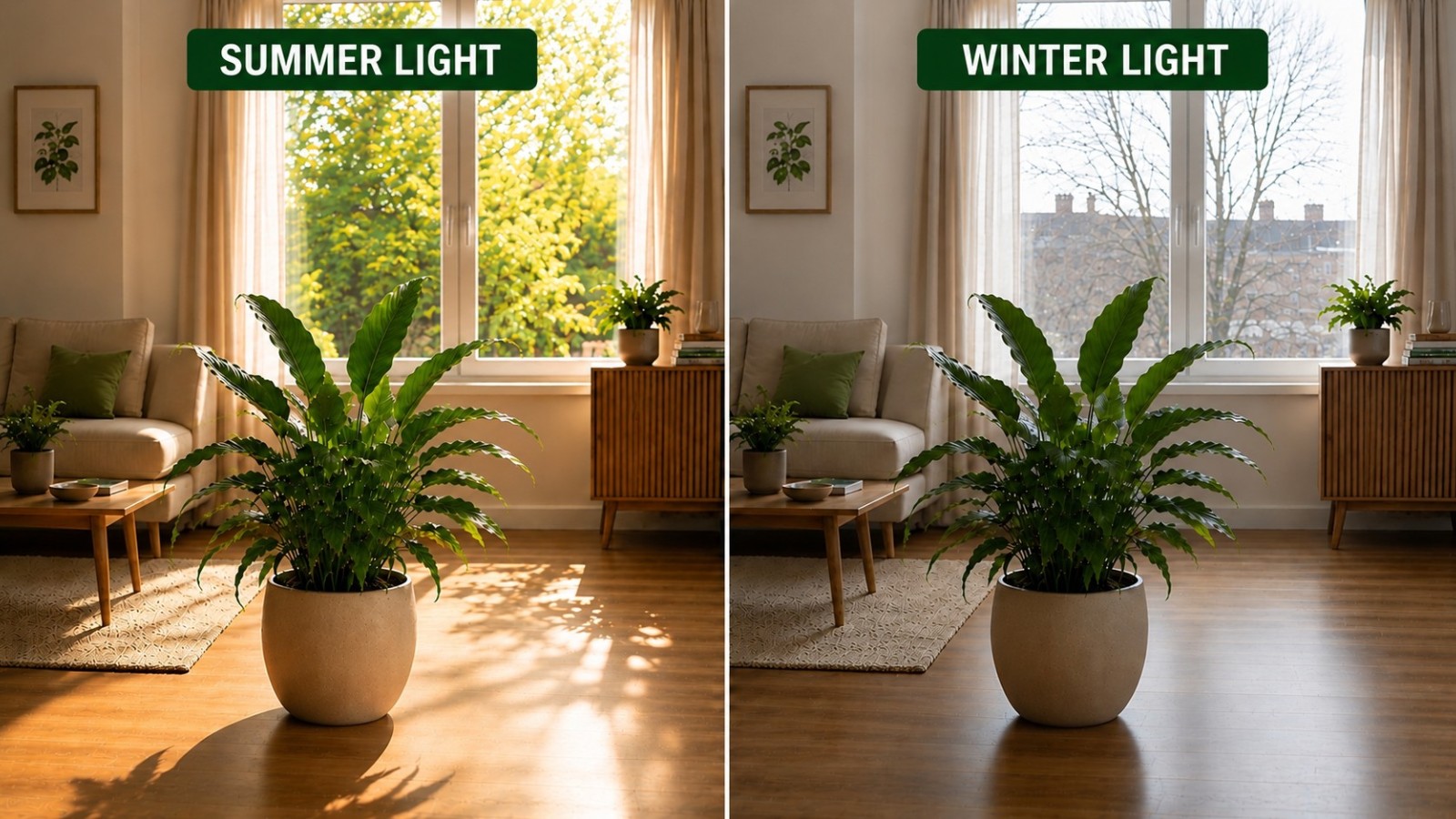
Lighting conditions do not remain the same throughout the year. Even when a plant stays in exactly the same location, the conditions around it can change. As a result, a plant does not receive the same amount of light throughout the year.
One of the main reasons is the change in day length. During certain periods of the year, the days are longer and more daylight is available. At other times, the days are shorter and a plant receives fewer hours of light. Consequently, the same location can provide different lighting conditions throughout the year.
The position of the sun also changes during the year. As a result, sunlight does not always enter a room or reach a location from the same angle. A place that receives plenty of light during one part of the year may offer noticeably different lighting conditions at another time.
In addition, the intensity of the light also changes. This means that the amount of usable light available to a plant does not remain constant. Because these changes usually occur gradually, they are not always noticed immediately.
For this reason, it is important not to regard light as a fixed factor. Lighting conditions change continuously throughout the year. Taking this into account leads to a better understanding of the conditions in which a plant grows and explains why the same location can function differently at different times of the year.
Frequently Asked Questions
Is direct sunlight the same as a lot of light?
No. A location can receive a large amount of light without the sun shining directly on the plant. That is why it is important to distinguish between the amount of light and the way in which that light reaches a plant.
Can a plant's location change throughout the year?
Yes. Changes in day length, the position of the sun and light intensity can alter lighting conditions throughout the year. As a result, the same location may provide different growing conditions at different times of the year.
Why do plants of the same species sometimes grow differently?
A plant's development is determined not only by its species but also by the conditions in which it grows. Differences in light and location can therefore cause plants of the same species to develop differently.
Why is it important to reassess light conditions regularly?
Lighting conditions can change throughout the day and throughout the year. By assessing a plant's location regularly, you gain a better understanding of the conditions in which it grows.